
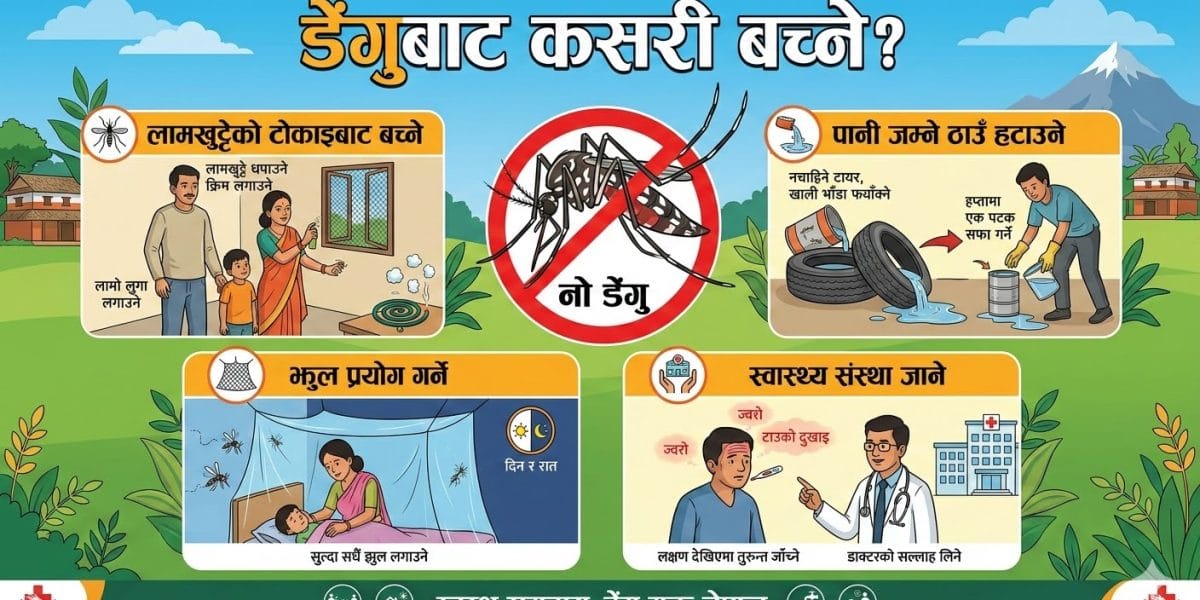
Kathmandu. Dengue cases have been steadily increasing in Nepal recently, with some fatalities reported. Doctors emphasize that early detection is crucial for effective prevention and treatment.
Dengue fever is a mosquito-borne viral infection. The disease spreads when a mosquito infected with the dengue virus bites a human.
Symptoms to Watch For
Many dengue symptoms are similar to common flu or viral fever. It is important to be cautious and get tested for dengue if you notice any of the following:
- Muscle and joint pain
- Red rashes that disappear and reappear
- Fever
- Headache
- Pain behind the eyes
- Vomiting and nausea
If you experience any of these symptoms, it is essential to consult a doctor immediately, as only a medical professional can provide proper guidance for dengue treatment.
How to Prevent Dengue
The most effective way to prevent dengue is to avoid mosquito bites. Here are some recommended measures:
1. Maintain Cleanliness
Keep your surroundings clean and tidy, as mosquitoes thrive in dirty or stagnant areas. Regular cleaning helps prevent mosquito breeding.
2. Remove Stagnant Water
Mosquitoes breed in stagnant water, increasing the risk of dengue transmission. Regularly empty unused containers, replace water in pots and plant trays weekly, and monitor manholes, septic tanks, and closed drains.
3. Use Mosquito Nets and Repellents
When going outdoors, apply mosquito repellent creams. Use mosquito nets while sleeping and burn mosquito-repelling incense if necessary. Installing screen doors and windows at home also helps prevent mosquito bites.
4. Do Not Ignore Early Symptoms
If any early symptoms of dengue appear, do not ignore them. Contact a doctor immediately and follow their advice.
Treatment Guidelines
Currently, there is no specific cure for dengue. Patients are advised to:
- Rest adequately
- Stay hydrated with plenty of fluids
- Follow doctor’s instructions carefully
Depending on the patient’s condition, doctors may recommend home care, hospital admission, referral to another facility, or emergency care.
For muscle pain and fever, medications like paracetamol or other painkillers can be used. However, doctors advise avoiding ibuprofen and aspirin, as they may increase complications in dengue patients.




Leave a Comment